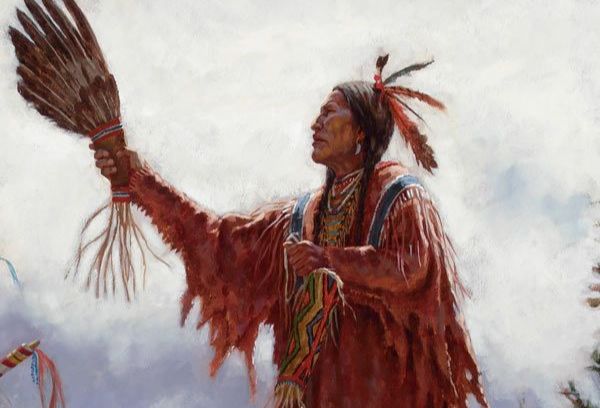
The Bridge Between Seen and Unseen
Across every continent and culture, humans have told stories of other realms — worlds layered beyond the visible, inhabited by spirits, ancestors, and forces that shape our destiny. In these narratives, the shaman emerges as the mediator between the tangible and the transcendent, one who walks between worlds to restore balance and retrieve wisdom. From the steppes of Mongolia to the jungles of the Amazon, the figure of the shaman has endured for millennia, adapting and reappearing in new forms while preserving a timeless fascination with the unseen.
Today, even in an age of science, data, and digital connectivity, the allure of shamanic journeys continues to captivate those seeking meaning beyond material reality. Whether through plant medicine ceremonies, drumming circles, or guided meditations, modern seekers rediscover an ancient path that promises insight, healing, and connection with something greater than the self.

The Ancient Role of the Shaman
The word “shaman” originates from the Tungus peoples of Siberia, yet similar spiritual figures appear in nearly every indigenous tradition. The shaman’s primary role was never that of a priest or magician but of a bridge — one who could traverse realms to communicate with spirits, heal the sick, and guide souls through life and death.
In traditional societies, illness was not merely physical but spiritual. When a person’s soul became fragmented or trapped in another realm, the shaman’s task was to retrieve it through trance, song, and ritual. This concept of “soul retrieval” — a restoration of wholeness — is one of the oldest forms of psychological and spiritual healing known to humanity.
Through rhythmic drumming, chanting, and fasting, shamans would enter altered states of consciousness. These states were not escapism but sacred journeys into the spirit world, undertaken for the benefit of the community. Each culture had its own cosmology — often structured into three worlds: the upper world (of deities and ancestors), the middle world (the realm of the living), and the lower world (a domain of spirits and raw power). To travel among them required courage, discipline, and deep respect for the forces encountered.
The Shaman’s Tools and Symbols
Every shamanic tradition developed its own symbolic language and ritual instruments, yet the underlying patterns are remarkably similar across continents. The drum, often called the shaman’s horse, serves as the primary vehicle for journeying. Its steady beat mirrors the rhythm of the heartbeat and induces a trance state that allows the shaman’s spirit to travel.
Feathers, bones, stones, and masks become more than decorations — they are conduits of power and reminders of connection to nature. Smoke from herbs or resins, such as sage or copal, purifies the space and opens a channel between realms.
These tools are not magical in themselves; their potency comes from intention and relationship. To the shaman, every object, every sound, and every gesture carries spirit. The natural world is alive with intelligence, and everything — from river stones to clouds — can be spoken to, if one knows how to listen.
The Modern Revival of Shamanism
Despite centuries of colonization, suppression, and skepticism, shamanic traditions have proven remarkably resilient. In recent decades, there has been a global revival of interest in indigenous wisdom and altered states of consciousness, often framed within the broader context of personal growth and spiritual exploration.
The countercultural movements of the 1960s opened the Western mind to Eastern spirituality, psychedelics, and indigenous ritual practices. Figures such as Carlos Castaneda, who popularized the teachings of a fictional Yaqui shaman named Don Juan, and anthropologists like Michael Harner, who founded “core shamanism,” played pivotal roles in bringing these practices into Western awareness.
While traditional shamans undergo years of initiation and community service, contemporary seekers often approach shamanism as a personal spiritual technology — a method for accessing intuitive knowledge, emotional healing, and connection to the Earth. Workshops and retreats promise guided journeys to meet spirit animals, ancestral guides, and aspects of one’s own psyche.
Critics argue that this modern adaptation risks oversimplifying or appropriating sacred traditions. Yet even with these tensions, the resurgence of interest reveals a deep cultural hunger: a longing to feel reconnected to something beyond the mechanistic worldview that has dominated Western thought.

Psychedelic Pathways and Plant Teachers
In the Amazon basin, shamans known as curanderos or ayahuasqueros have long used the visionary brew ayahuasca to enter the spirit world. Composed of two plants that together activate powerful psychoactive compounds, ayahuasca induces vivid, transformative experiences often described as journeys through one’s soul.
For centuries, these ceremonies were localized within tribal contexts, guided by strict ritual frameworks. But in recent decades, ayahuasca has traveled beyond the rainforest to urban centers worldwide. Western participants seek it not only for healing but for revelation — to glimpse other dimensions of consciousness or to confront the deep wounds of the psyche.
Other sacred plants — peyote, psilocybin mushrooms, San Pedro cactus — have similarly been embraced as “plant teachers.” They are not seen as drugs but as sentient beings with wisdom to impart. Participants often report encounters with archetypal visions, ancestral presences, or a profound sense of unity with the cosmos.
While the scientific community increasingly studies these substances for their therapeutic potential in treating depression, PTSD, and addiction, indigenous voices remind the world that the true essence of such experiences lies not in chemical composition but in relationship — with the plants, with spirit, and with the web of life itself.
The Psychology of the Spirit Journey
From a psychological perspective, shamanic journeys mirror the internal processes of the human psyche. Jungian psychology, with its emphasis on archetypes and the collective unconscious, resonates deeply with shamanic cosmology. Jung himself considered shamanic experiences expressions of deep psychic truth — symbolic voyages into the unconscious where transformation occurs.
The descent into the underworld, a common motif in shamanic narratives, parallels the psychological process of confronting one’s shadow — the repressed or denied aspects of self. Emerging from that descent with insight and renewed vitality mirrors the therapeutic journey of integration.
In this sense, the shamanic path offers a profound metaphor for inner work. Whether one believes in literal spirits or views them as psychic projections, the journey serves the same purpose: to bridge divisions within the self and between humanity and the natural world.
Shamanism in the Digital Age
It might seem paradoxical that an ancient tradition rooted in drumming, trance, and nature spirits would thrive in the age of smartphones and virtual reality. Yet digital shamanism has become a growing phenomenon. Online communities host virtual drum circles, livestreamed ceremonies, and guided meditations promising access to spirit realms through screens and headphones.
Technology, once viewed as the great divider between humans and nature, is now being reimagined as a tool for spiritual connection. Some practitioners experiment with virtual environments designed to replicate the imagery of shamanic journeys — glowing forests, celestial temples, or animated visions of animal guides.
While skeptics question the authenticity of such digital experiences, others argue that shamanism has always evolved to meet the consciousness of its time. The core remains unchanged: the desire to transcend ordinary perception and experience the interconnectedness of all things.
The Ethics and Responsibility of Journeying
With the popularization of shamanic practices comes a crucial ethical dimension. True shamanism is never self-serving; it exists for the healing of the community and the Earth. Modern practitioners must therefore approach these traditions with humility, cultural sensitivity, and ecological awareness.
Cultural appropriation — the borrowing of indigenous rituals without context or respect — risks distorting sacred knowledge and perpetuating harm. Responsible engagement requires not only acknowledgment but reciprocity: supporting indigenous communities, protecting sacred lands, and honoring the lineages that preserved these practices against all odds.
Furthermore, the inner worlds revealed through shamanic practice are not playgrounds but sacred territories. Without proper guidance or grounding, seekers may encounter overwhelming experiences that demand careful integration. Authentic teachers emphasize preparation, discipline, and the cultivation of ethical intention — not the pursuit of spectacle or escapism.
The Return to Wholeness
At its heart, the enduring allure of shamanic journeys lies in the promise of wholeness. In a fragmented modern world where many feel alienated from nature, from each other, and from their own inner life, shamanism offers a path of reconnection. It reminds us that spirit is not elsewhere but everywhere — in the rustle of leaves, the rhythm of breath, and the dreams that visit in the night.

Between Worlds
To walk the shamanic path is to live between worlds — not to escape the ordinary but to infuse it with the sacred. In every ritual drumbeat, in every whispered prayer to the wind, there is a memory of our ancestral kinship with the cosmos.
As humanity stands at the crossroads of ecological crisis and spiritual hunger, the wisdom of the shamans feels less like an ancient relic and more like a roadmap home. They teach that healing begins not with domination but with listening — to the Earth, to the spirits, and to the quiet voice within.