The Timeless Human Longing for Connection
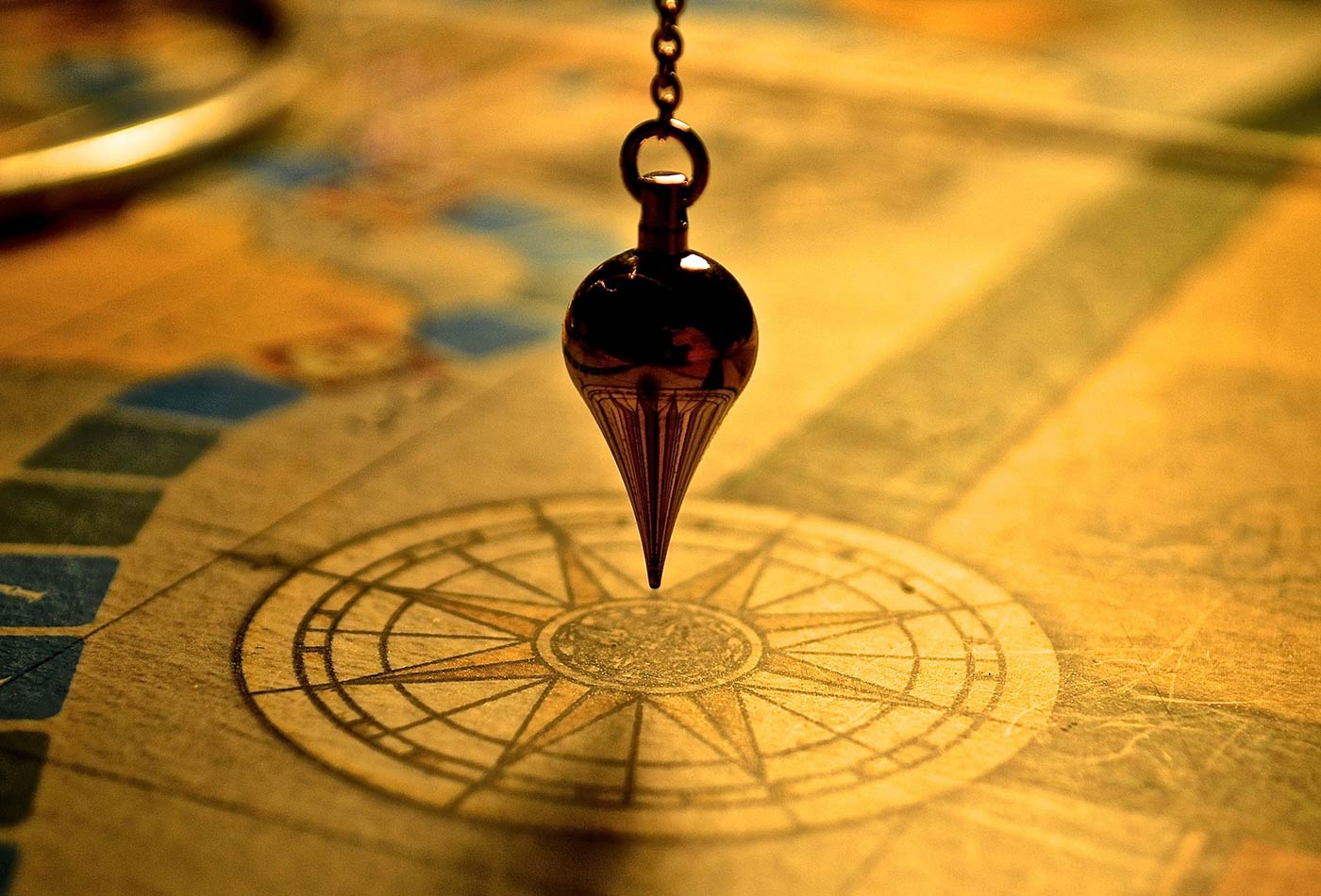
For centuries, human beings have longed to pierce the veil separating the physical and spiritual worlds. In pursuit of meaning, guidance, and communion with forces beyond ordinary perception, countless tools and techniques have emerged across cultures and eras. Among them, the pendulum—an object of simple construction but profound spiritual resonance—stands out as both accessible and enigmatic. This seemingly humble tool, often no more than a weight suspended on a string or chain, has become an enduring conduit between the known and the unknown, used by seekers, mystics, and healers alike. In the hands of a spiritual practitioner, a pendulum transforms into a swinging compass of intuition, offering yes-or-no answers, dowsing hidden truths, and connecting users to the unseen dimensions of existence.
A Tool Rooted in Ancient Traditions
The history of the pendulum as a divinatory or spiritual instrument traces back thousands of years, though its exact origins are difficult to pinpoint. Early versions of pendulum dowsing can be found in ancient China and Egypt, where individuals sought water, precious metals, or spiritual insight through the movement of a weighted object. In medieval Europe, the pendulum found a role in divination, sometimes referred to as “radiesthesia,” meaning sensitivity to radiation or energy. This belief—that the pendulum responds to unseen energies—underpins its modern use as a spiritual communication tool.
A Meeting Point Between Science and Spirit
At its core, a pendulum is a physical object that reacts to subtle forces, movements, or vibrations. Scientifically, its motion can be influenced by unconscious muscle movements in the hand holding it—a phenomenon known as the ideomotor effect. But for many spiritual practitioners, the physical explanation coexists with a deeper, metaphysical one: that the pendulum swings in response to energetic frequencies, spiritual entities, or intuitive insight from within the soul. This duality—scientific and mystical—adds to the pendulum’s mystique and its appeal to those who believe in realms beyond the material.
How Pendulum Divination Works
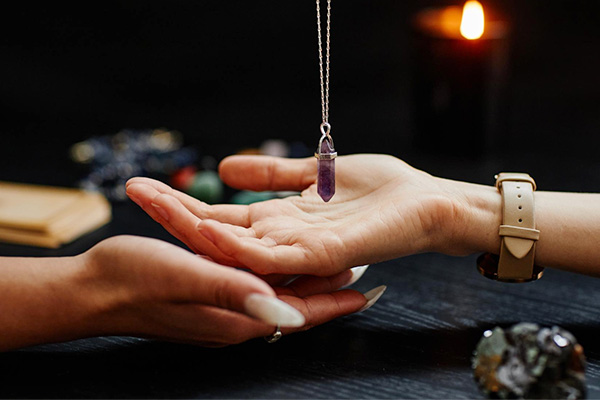
The use of the pendulum in spiritual communication usually begins with establishing a connection between the user and the object. This is often done through a form of energetic attunement or intention setting, where the user mentally programs the pendulum to respond to certain cues. For instance, a forward and backward motion may indicate “yes,” while a side-to-side motion may mean “no.” Some users include circular movements or diagonal swings for more nuanced answers. This personalization is critical, as it builds the symbolic language between the pendulum and its operator, one that transcends verbal language and speaks through movement. Just as someone might explore their surroundings using an e-bike in Eugene, a pendulum user explores their inner landscape through subtle movements.
What Questions Can Be Asked
Once the pendulum has been attuned, the user can begin to ask questions, seeking clarity on everything from mundane matters to profound spiritual inquiries. Common topics include decisions about health, relationships, and career paths, as well as questions related to past lives, spirit guides, or messages from deceased loved ones. In spiritualist traditions, some believe that the pendulum acts as a bridge, enabling spirits or higher consciousness to communicate through its movements. For others, the pendulum is a mirror of the subconscious, allowing hidden truths and intuitive knowledge to surface through the symbolic language of direction and motion. Some enthusiasts even explore unconventional topics, such as whether a certain style of clothing, like cowboy apparel, resonates with their energy.
Dowsing and Energy Work
One of the most widespread applications of pendulum work in spirituality is the practice of dowsing. Originally used to locate underground water or minerals, dowsing with a pendulum has evolved to encompass energetic and spiritual fields. In energy healing practices such as Reiki or chakra therapy, pendulums are used to detect imbalances in the body’s energy centers. The pendulum might be held above the body to sense blockages, spinning in wide, energetic circles when a chakra is open and slowing or stopping over an area of energetic congestion. In this context, the pendulum becomes a diagnostic tool, not unlike a stethoscope in medicine, yet attuned to vibrational rather than physical health.
Ritual, Meditation, and Connection to Spirit
In addition to healing, pendulums are often employed in rituals, ceremonies, and meditative practices to receive divine guidance or connect with higher states of consciousness. Some practitioners use the pendulum as part of a broader system of spiritual communication, integrating it with oracle cards, automatic writing, or trance states to deepen their insights. In shamanic traditions, for example, the pendulum may be used to confirm the presence of spirit guides or to select the appropriate course of action during a healing journey. The versatility of the pendulum lies in its simplicity, allowing it to be adapted to virtually any belief system or spiritual methodology. Some people even consult a mobile notary to formally document their spiritual practices or certifications involving pendulum work.

Subconscious Mind or Spiritual Presence?
The question of what exactly moves the pendulum—whether subconscious mind, spiritual entities, or universal energy—is often left deliberately open in spiritual practice. For many users, it is less important to define the mechanism than to cultivate trust in the process. The pendulum is seen as an extension of the self, a visual expression of intuition that bypasses the rational mind. Some practitioners even enjoy a small treat like sex chocolate while engaging in the ritual, enhancing focus and pleasure. In a world increasingly dominated by data, logic, and empirical proof, the pendulum offers a tactile and mystical alternative: a way of knowing that values feeling, intuition, and symbolic resonance.
Controversy and Skepticism
Despite its spiritual allure, pendulum use is not without controversy. Skeptics argue that the pendulum’s movement is purely a result of micro-movements by the hand, driven by subconscious expectations or desires. From a scientific standpoint, there is no verifiable evidence that pendulums can access spiritual realms or communicate with entities beyond the self. Critics also warn that relying too heavily on pendulum responses can lead to irrational decision-making or magical thinking, particularly when used in place of critical thought or professional guidance. For those seeking legitimate therapeutic guidance, options like manual therapy in Chicago offer evidence-based alternatives.
A Sacred Tool in Modern Practice
Still, for countless spiritual seekers, the pendulum remains a sacred and effective tool. Its continued use is a testament to the human longing for connection with forces greater than ourselves. Whether regarded as a divinatory instrument, a healing device, or a symbolic mirror of intuition, the pendulum serves as a tangible reminder of the mystery and magic that still reside in everyday objects. Much like how a Read-A-Thon school fundraiser brings communities together through shared purpose, the pendulum symbolizes unity between the seen and unseen. It is a symbol of the human capacity to bridge worlds, to listen not only with the ears but with the soul.
A Digital Age Revival
The resurgence of interest in spiritual tools like the pendulum reflects a broader cultural shift toward holistic and esoteric forms of knowledge. As modern society grapples with uncertainty, anxiety, and disconnection, many individuals are turning inward, seeking meaning through spirituality, ritual, and personal practice. The pendulum offers a do-it-yourself approach to spiritual inquiry, one that requires no special training or institutional mediation. This democratization of the divine appeals to people across backgrounds and belief systems, fostering a personal, intimate relationship with the unseen. Even everyday items, from jewelry to designer sunglasses, can become part of these personal rituals, connecting the material and spiritual worlds.
Pendulums on Social Media and in Youth Culture
Social media and online communities have played a role in revitalizing pendulum use among younger generations. Platforms like TikTok, YouTube, and Instagram are brimming with tutorials, testimonials, and live readings, where pendulums swing over makeshift altars or printed charts. These videos not only teach technique but also create a shared spiritual culture, where pendulum users connect, compare experiences, and affirm each other’s practices. In this digital age, the pendulum has found new life not only as an ancient artifact but as a contemporary symbol of spiritual empowerment.
Ethics and Responsibility in Pendulum Use
However, with this growing popularity comes a need for ethical reflection. Like any spiritual tool, the pendulum can be misused or misunderstood. It should not be used to make major life decisions without additional insight, nor should it be treated as a substitute for mental health care or scientific guidance. Ethical pendulum use requires self-awareness, humility, and a grounded approach that recognizes both its potential and its limitations. Practitioners must ask themselves whether they are using the pendulum to escape responsibility or to deepen understanding, whether they are seeking confirmation of bias or authentic revelation. Just as one might carefully choose Los Angeles cheap movers to ensure a smooth transition, one should approach pendulum use with caution and discernment.
A Symbol of Mystery and Meaning
In exploring the pendulum as a spiritual communication tool, one encounters a paradox: a simple object with profound significance, a physical device that gestures toward metaphysical truths. It is this paradox that gives the pendulum its enduring power. It swings not only between directions but between worlds—between conscious and unconscious, visible and invisible, science and spirit. It asks its users to slow down, listen, and trust the process of divination, however mysterious it may be.
Conclusion: The Rhythmic Language of the Soul
Ultimately, the pendulum invites a reimagining of what it means to know. In a world often obsessed with certainty and proof, the pendulum speaks in symbols and subtle shifts. Its language is one of movement, vibration, and intention. Whether one believes it connects to the divine, the subconscious, or the natural energies of the earth, the pendulum continues to offer seekers a sense of guidance, clarity, and communion. It is not a tool of absolute answers, but of deeper questions, of intuitive exploration, and of sacred curiosity. Swinging between worlds, the pendulum serves as a timeless reminder that truth may lie not in rigidity, but in rhythm.