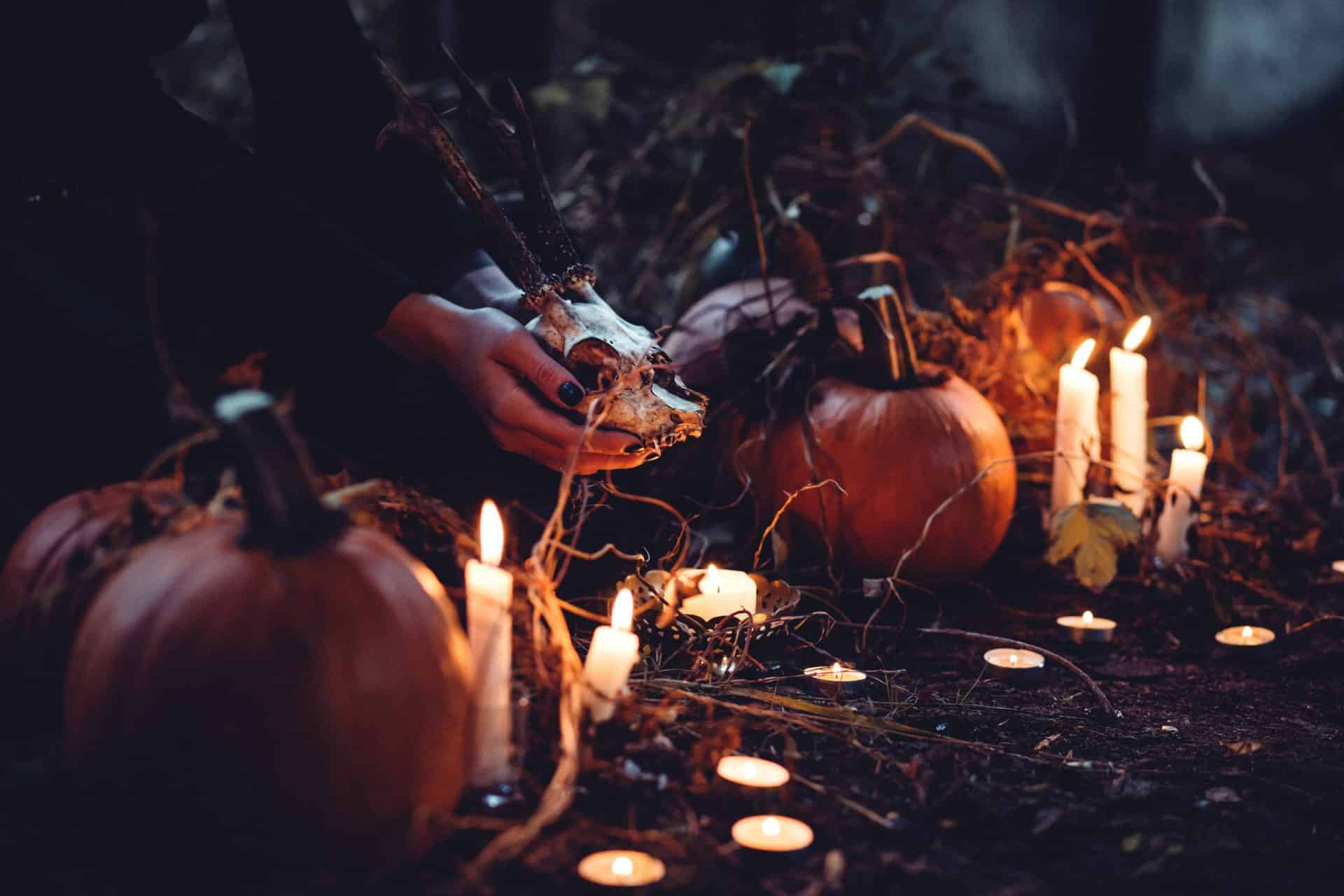
The Ancient Roots of a Shadowed Festival
Long before plastic pumpkins and candy aisles took over October, the end of autumn was a time of deep spiritual significance. The origins of Halloween trace back over two millennia to the Celtic festival of Samhain (pronounced “Sow-in”), celebrated across what is now Ireland, Scotland, and parts of northern France. To the ancient Celts, the night of October 31 marked the threshold between the light of summer and the darkness of winter, a liminal moment when the boundary between the living and the dead grew thin.
Samhain was not simply a harvest celebration—it was a recognition of mortality and mystery. Fires blazed across hillsides to guide ancestral spirits home and to ward off malevolent forces. People donned disguises made of animal hides and masks to confuse wandering ghosts, a custom that foreshadowed the modern practice of dressing up. Offerings of food and drink were left outside homes to appease spirits and ensure survival through the cold months ahead.

Roman Influence and the Shaping of a Hybrid Tradition
As the Roman Empire expanded into Celtic territories, its own traditions began to intermingle with Samhain. Two Roman festivals in particular—Feralia, a day to honor the dead, and Pomona, dedicated to the goddess of fruit and orchards—melded with Celtic observances. From Pomona’s association with apples came the enduring custom of apple bobbing, a lighthearted echo of ancient rituals of fertility and fortune-telling.
Over centuries of cultural fusion, these traditions formed the bedrock of a broader autumnal celebration of both death and harvest. Yet it wasn’t until the rise of Christianity in Europe that Samhain began to take on a distinctly new identity—one reshaped to fit within a Christian worldview.
Christianity and the Birth of “All Hallows”
By the 8th century, the Catholic Church sought to Christianize pagan festivals that remained deeply rooted in the populace. In 835 CE, Pope Gregory IV established All Saints’ Day (also called All Hallows’ Day) on November 1 to honor saints and martyrs. The evening before—October 31—became known as All Hallows’ Eve, which over time morphed linguistically into “Halloween.”
Though the Church intended to sanctify the occasion, the old beliefs never fully vanished. Many communities continued to light bonfires and wear disguises, now reinterpreted as ways to ward off evil rather than commune with spirits. The Church’s attempt at assimilation created a duality within Halloween: it became both sacred and profane, spiritual and mischievous. This tension would shape its evolution for centuries.
Medieval Mischief and Soul Cakes
During the Middle Ages, Halloween in Europe transformed into a blend of solemnity and social tradition. People engaged in “souling,” a custom where the poor went door to door offering prayers for the dead in exchange for food—often small cakes known as “soul cakes.” This practice laid the groundwork for what would eventually become trick-or-treating.
At the same time, “guising” took hold in Scotland and Ireland. Children and adults dressed in costumes to perform songs, recite verses, or play tricks in exchange for offerings. What had begun as a form of ritual disguise now became a kind of theatrical game, part reverence and part revelry.
Halloween had become a night when the social order loosened and ordinary rules were suspended. Mischief was permitted; masks gave anonymity to pranks. Yet beneath the laughter, the night still carried an undercurrent of the uncanny—a reminder of death’s nearness and life’s fleeting warmth.
The Journey Across the Atlantic
When Irish and Scottish immigrants brought their customs to North America in the 19th century, they encountered a society with different beliefs and rhythms. The Puritans of New England disapproved of the holiday’s pagan and Catholic overtones, but in the more culturally diverse regions, Halloween found fertile ground.
In America, Halloween began to shed its purely spiritual associations. It evolved into a community celebration, particularly in the late 19th and early 20th centuries, when neighborhood gatherings, autumn festivals, and “play parties” became popular. Ghost stories, parlor games, and fortune-telling mingled with harvest décor—corn husks, pumpkins, and apples.
It was in this new context that one of Halloween’s most iconic symbols emerged: the jack-o’-lantern. The tradition derived from an Irish legend about “Stingy Jack,” a trickster doomed to wander the earth with a hollowed-out turnip lantern. In America, where pumpkins were abundant, immigrants adapted the story—creating the glowing orange faces that now define Halloween imagery.

Tricks, Treats, and the Rise of American Commercialism
By the early 20th century, Halloween had begun to transform into a children’s holiday, emphasizing fun over fear. Trick-or-treating, first popularized in the 1920s and 1930s, drew from the older practices of guising and souling. Children dressed in costumes and went door to door collecting candy, sweets, or small coins—a tradition that strengthened community ties even as it provided a thrill of mischief.
However, the Great Depression and later World War II temporarily subdued Halloween festivities. Sugar rationing and social hardship made large celebrations impractical. But after the war, with suburban growth and baby booms, Halloween experienced a powerful revival.
The 1950s and 1960s saw the holiday become a mainstream American institution. Candy companies, costume manufacturers, and film studios capitalized on its popularity. The first mass-produced plastic masks and synthetic costumes appeared, depicting everything from cowboys to comic-book heroes. Neighborhoods organized safe trick-or-treating routes, and television specials like It’s the Great Pumpkin, Charlie Brown (1966) enshrined Halloween as part of national culture.
The Haunted Boom of the Late 20th Century
By the late 20th century, Halloween had become a billion-dollar industry. The emergence of haunted attractions—from commercial haunted houses to theme park events like Universal Studios’ Halloween Horror Nights—transformed the holiday into an immersive experience for both children and adults.
The horror film boom of the 1970s and 1980s, led by movies such as Halloween (1978), Friday the 13th (1980), and A Nightmare on Elm Street (1984), further solidified the season’s darker aesthetic. What began as folklore about spirits and harvests was now entwined with modern fears—masked killers, supernatural forces, and urban legends.
Halloween had evolved into a cultural mirror, reflecting society’s anxieties through the lens of entertainment. It was a safe space to confront fear, to ritualize danger in controlled bursts of adrenaline. The masks had changed, but the essence—our fascination with the boundary between the ordinary and the otherworldly—remained intact.
Globalization and the Halloween Export
In the 21st century, Halloween has become a global phenomenon, though not without controversy. American media, retail influence, and internet culture have exported pumpkins, costumes, and candy to nations where such traditions were once foreign. Cities from Tokyo to Paris now host Halloween parades, and themed parties fill social calendars from Brazil to South Korea.
Yet reactions vary. Some embrace the holiday’s playful spirit; others criticize it as a symbol of Western consumerism overriding local traditions. Still, the holiday continues to adapt—melding with local customs in creative ways. In Mexico, for instance, Halloween’s imagery blends seamlessly with Día de los Muertos, producing a hybrid celebration of remembrance and fun. In Europe, older All Saints’ observances coexist with newer costume parties and trick-or-treating.
The Superstore Era: Halloween as Big Business
Walk into any major retailer in early October, and it’s clear that Halloween has reached new commercial heights. Entire aisles overflow with elaborate costumes, animatronic ghouls, LED-lit tombstones, and an ever-growing range of themed merchandise. According to recent statistics, Americans spend billions annually on Halloween—on candy, decorations, and costumes alike.
This commodification has made Halloween one of the most lucrative holidays in the Western calendar, second only to Christmas in consumer spending. Social media has amplified the spectacle further: Instagram-worthy decorations, viral costume trends, and DIY tutorials have transformed Halloween into a creative competition as much as a celebration.
The Enduring Spirit of the Season
Despite centuries of change, Halloween continues to fulfill the same essential human needs it always has. It offers a structured encounter with fear, a playful engagement with death, and a communal release through festivity. Even in an age of LED pumpkins and candy corn capitalism, the underlying currents of the holiday remain deeply psychological and symbolic.
We still light our porches not unlike ancient Celts lit their bonfires. We still disguise ourselves, though now in polyester and makeup instead of animal hides. We still gather to tell stories, to confront the eerie unknown—whether through ghost tours, horror films, or whispered legends around a backyard fire.

From Ancient Firelight to Fluorescent Glow
The journey from Samhain’s sacred fires to the fluorescent-lit aisles of superstores tells more than the story of a holiday—it reveals how cultures evolve while carrying fragments of the past within them. Halloween has transformed from a night of fear and reverence into one of fun and fantasy, yet the pulse that animates it remains the same: the yearning to connect with mystery, to find joy in transformation, and to acknowledge the unseen forces that shape our lives.