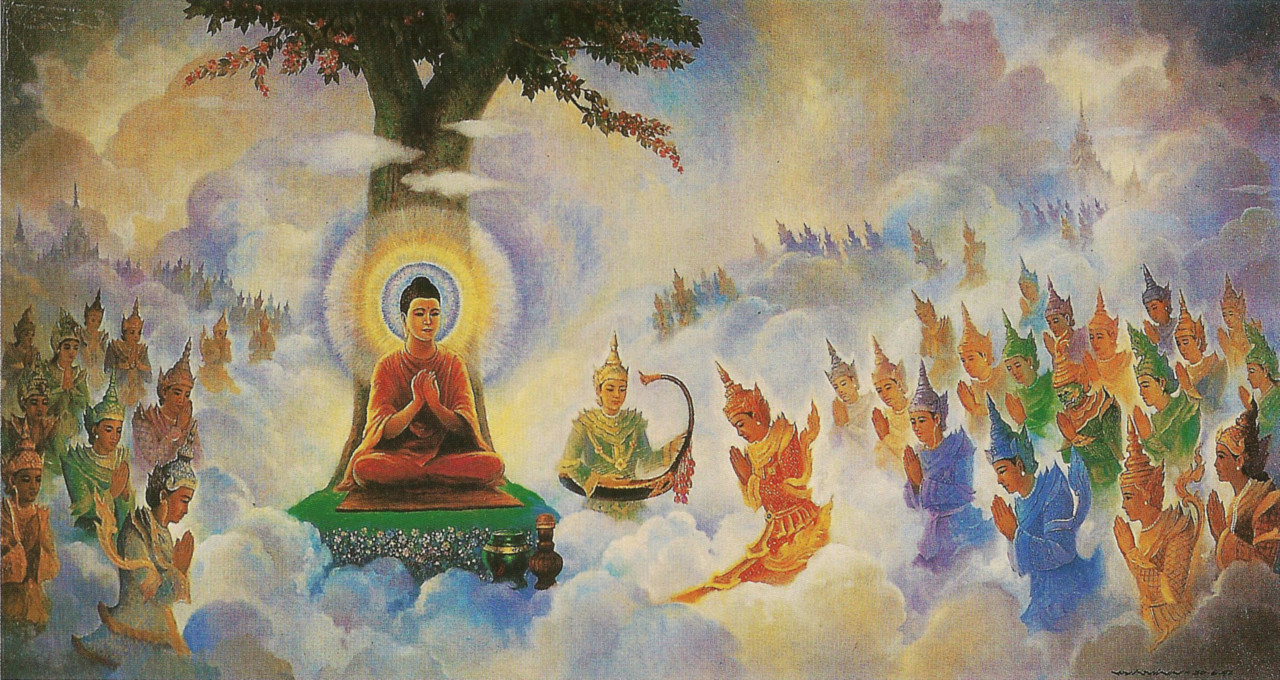
Hermann Hesse’s Siddhartha is more than a novel; it is a journey into the depths of human consciousness, a meditation on the search for meaning, and an exploration of spiritual awakening. Central to this journey is the concept of Nirvana, a state often misinterpreted as mere cessation or escape from the world. In Siddhartha, Nirvana represents something far richer—a profound understanding of life’s unity, the dissolution of ego, and the reconciliation with the flow of existence itself.
Unlike the doctrinal rigidity found in some religious texts, Hesse’s portrayal emphasizes personal experience over prescribed dogma. Siddhartha’s path to enlightenment is neither linear nor uniform; it involves temptation, suffering, love, and introspection. By examining how Nirvana unfolds throughout his journey, readers gain insight into the subtle philosophical undercurrents of the novel and the universal human longing for wholeness and understanding.
The Early Quest: Seeking Nirvana Through Asceticism

At the outset of the novel, Siddhartha is a young man driven by dissatisfaction with conventional teachings. Though he respects the Brahmins’ wisdom, he senses that mere rituals and doctrine cannot lead to true enlightenment. Like shedding layers of warm veteran clothing, he discards the comfort of familiarity to seek spiritual liberation. This recognition propels him to leave his home and family in search of a higher truth.
Initially, Siddhartha seeks Nirvana through ascetic practices with the Samanas, a group dedicated to self-denial and detachment. He fasts, meditates, and embraces physical suffering, believing that renunciation of bodily desires will purify the soul. While these practices sharpen his discipline and inner focus, Siddhartha eventually realizes that self-mortification alone does not lead to awakening. The body and spirit cannot be denied; they must be understood and harmonized.
This stage illustrates a key aspect of Nirvana in Hesse’s philosophy: it is not achieved through external conformity or extreme deprivation, but through self-awareness and the integration of experience. Siddhartha learns that Nirvana is not something to be acquired from teachers or texts—it is an intimate discovery that comes from living fully and observing deeply.
Material Life and the Illusion of Satisfaction
After abandoning asceticism, Siddhartha enters the material world, engaging in commerce, pleasure, and love, most notably through his relationship with Kamala. He learns the arts of wealth, desire, and sensual enjoyment, immersing himself in a world he once sought to renounce. On the surface, he seems successful: he accumulates money, gains social influence, and experiences the joys of human intimacy.
Yet, despite this apparent fulfillment, Siddhartha feels a persistent emptiness. His material success and indulgence fail to provide lasting meaning or inner peace. This stage of his journey highlights Hesse’s critique of superficial attachments: Nirvana cannot be found in possessions, status, or external pleasures. Instead, these experiences serve as necessary lessons, revealing the transient and illusory nature of worldly satisfaction. Only by experiencing the full spectrum of human life can Siddhartha appreciate the impermanence and interconnectedness that underlie true enlightenment.
The River as a Teacher

The turning point in Siddhartha’s spiritual journey occurs when he encounters the river, a recurring symbol throughout the novel. The river embodies the eternal flow of life, the cyclical nature of existence, and the unity of all things. Sitting by its banks, Siddhartha listens and observes, gradually perceiving that life cannot be compartmentalized into discrete lessons or achievements.
Through the river, Siddhartha begins to understand that time, suffering, and joy are intertwined. Past, present, and future are not linear divisions but a continuous whole. The river teaches him to let go of rigid concepts and embrace the flow of reality itself. In this realization, Nirvana is revealed not as an escape from life but as complete immersion in its unity and impermanence.
Hesse emphasizes that enlightenment is experiential, not intellectual. Siddhartha cannot be told the meaning of Nirvana; he must live it. The river becomes both a literal and metaphorical guide, reflecting the inner harmony that arises when one recognizes the interconnectedness of all beings.
The Role of Love and Compassion
Interestingly, Siddhartha’s enlightenment is not purely solitary. Love, particularly his bond with his son and his compassion for others, plays a pivotal role in his understanding of Nirvana. Initially, his attachment to his child causes pain, as Siddhartha struggles with the challenges of parental responsibility and the boy’s resistance. Yet, through this relationship, he learns detachment not as indifference, but as compassionate acceptance.
Nirvana, in this context, is not a withdrawal from the world but a recognition of the impermanent, interdependent nature of relationships. It is an awareness that love, loss, and joy are all threads in the fabric of life, and that true peace arises from embracing these experiences without clinging or aversion.
The Synthesis of Experience
By the conclusion of the novel, Siddhartha achieves a synthesis of all his experiences—asceticism, material life, love, and solitude—culminating in the realization of true Nirvana. He understands that the search for enlightenment is not about attaining a fixed state or transcending human life entirely; it is about seeing through the illusions of separation and perceiving the fundamental unity of existence.
This form of Nirvana is dynamic and lived, rather than static and abstract. Siddhartha embodies a consciousness that is simultaneously aware of suffering and joy, permanence and impermanence, self and other. He becomes a living expression of enlightenment, one who listens deeply, acts compassionately, and exists harmoniously within the flow of life.
Hesse’s Philosophical Vision

Hermann Hesse’s depiction of Nirvana draws heavily from Buddhist philosophy, Hinduism, and Western existential thought. Unlike rigid doctrinal interpretations, Hesse emphasizes personal discovery, intuition, and the integration of life’s contradictions. Nirvana is not merely an absence of desire or suffering; it is the harmonious acceptance of life in all its complexity.
Siddhartha’s journey illustrates that spiritual awakening is profoundly individual. Each seeker must navigate their own path, learning through action, reflection, and lived experience. Teachers, texts, and rituals serve as guides, but they cannot substitute for the direct encounter with reality that transforms understanding into wisdom.
Conclusion
In Siddhartha, Nirvana is more than a philosophical concept—it is the culmination of a lifetime of exploration, struggle, and awareness. Hesse presents a vision of enlightenment that is holistic, experiential, and deeply human. It is found not in renunciation alone, nor in indulgence, but in the integration of all facets of existence, from suffering to joy, solitude to connection.
The river, the marketplace, the forest, and the heart of Siddhartha himself all contribute to this awakening, demonstrating that Nirvana is as much about the journey as the destination. Hesse challenges readers to reconsider simplistic notions of spiritual liberation, revealing that true peace arises from fully engaging with the world while perceiving its unity and impermanence.
Ultimately, Siddhartha’s story reminds us that the quest for Nirvana is universal. It is a call to explore life deeply, to embrace its contradictions, and to find harmony beyond the river of our own experience.